Yule: The Long Fire of Midwinter
Among the peoples of Irminar, Yule, also called Jul, is not merely a feast, it is the hinge of the year.
When the sun sinks to its weakest strength and the nights seem to stretch without end, the tribes gather close to fire, kin, oath, and memory. This holy tide is called Jólblôt by the old ritespeakers: the midwinter offering, the deep-winter blessing, the long vigil by which the people call the sun back from the dark.
Yule falls at the Winter Solstice, when the year appears to stand still. The fields are sleeping. The roads are hard with frost. Rivers slow beneath ice. In the forests, sounds carry far. Folk say that in such nights, the worlds veil thins. The dead draw near. The gods listen. Ill-winds wander.
For this reason, no hearth is left cold.
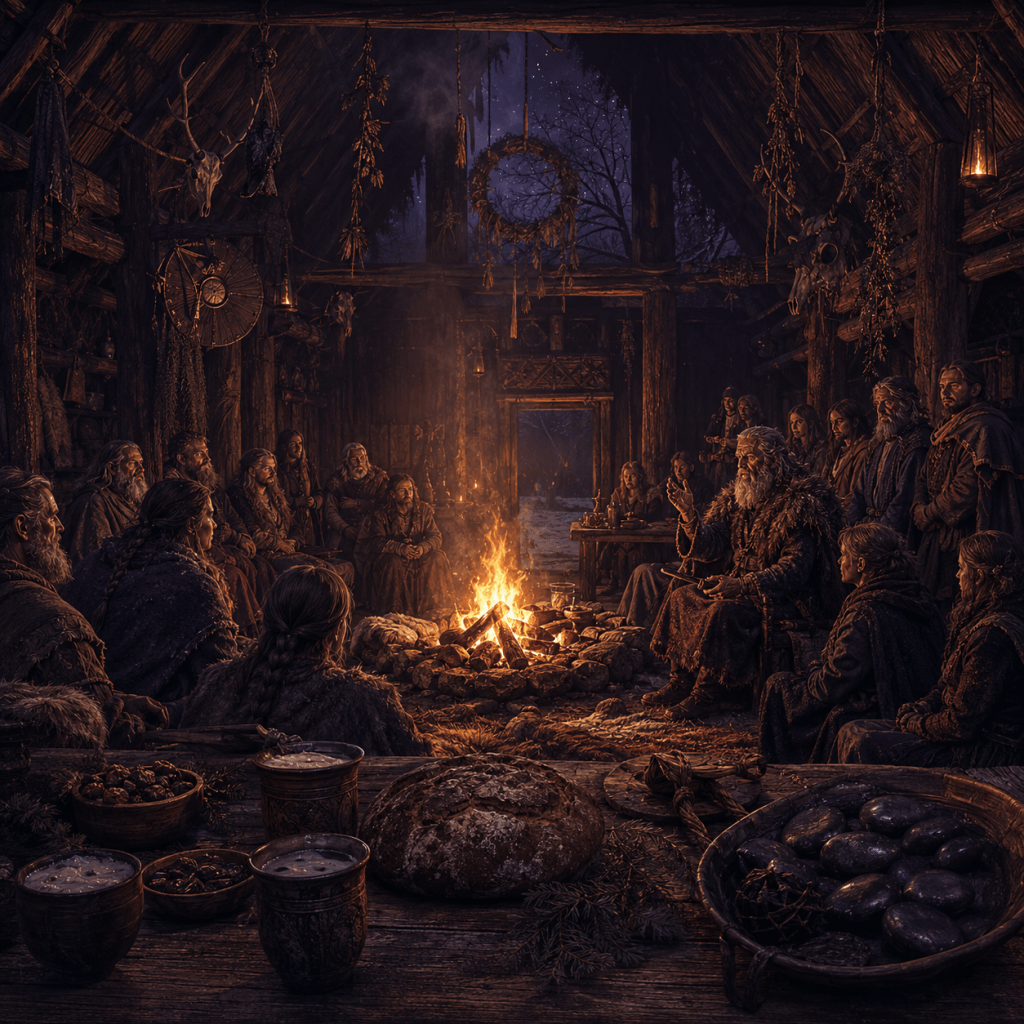
Sacred fires are kept burning for several nights. Some steads feed the same flame from dusk to dawn, passing watch from elder to youth so that no one person bears the whole burden of the dark. Others kindle a great communal fire and carry coals from it back to their homes, so that every hearth in the village burns with a shared blessing.
Bread and beer are offered first.
A heel of bread is placed near the flame. A cup of beer is poured for the gods, the ancestors, and the unseen household powers that have guarded the roof through the turning year. No one eats before the offering is made. To do so would be to claim life before giving thanks for it.
Then come the tales.
Yule is the season of long memory. Ancestor stories are shared in full, often with difficult truths laid bare. Children hear the names of those who raised the first beams of the hall, broke the first soil, crossed the first river, or survived the first hunger. Lineage is not spoken as vanity, but as duty. To know whose blood came before is to know what work was done for them, and what one must not shame.
In many halls, the oath-stones are brought out only at Yule.
These stones are old, dark, and smooth from generations of hands. Some are kept wrapped in wool. Some are marked with signs. Some are said to have been carried from ancestral graves or river crossings. Before them, folk renew pledges, settle disputes, swear marriages, name heirs, or promise labor for the coming year.
An oath made at Yule is heavy.
The gods hear it.
The ancestors remember it.
The hearth holds it.
To break such a vow is not merely to lie. It is to loosen one’s place among kin.
The deepest meaning of Yule is renewal. The sun is weak, but not dead. The land is frozen, but not barren. The old year is ending, but its breath has not vanished. What has been lost is named. What must be carried forward is chosen. What has gone wrong is brought into firelight and judged.
So the people keep flame through the dark.
They eat.
They remember.
They swear.
They wait.
And when dawn finally comes pale over the frost, even the smallest brightness is received as a sign.
The sun has turned.
The year has not failed.
The hearth still lives.
Tribal Customs of Yule
Though every tribe of Irminar keeps Yule in some form, each people gives the holy tide its own shape.
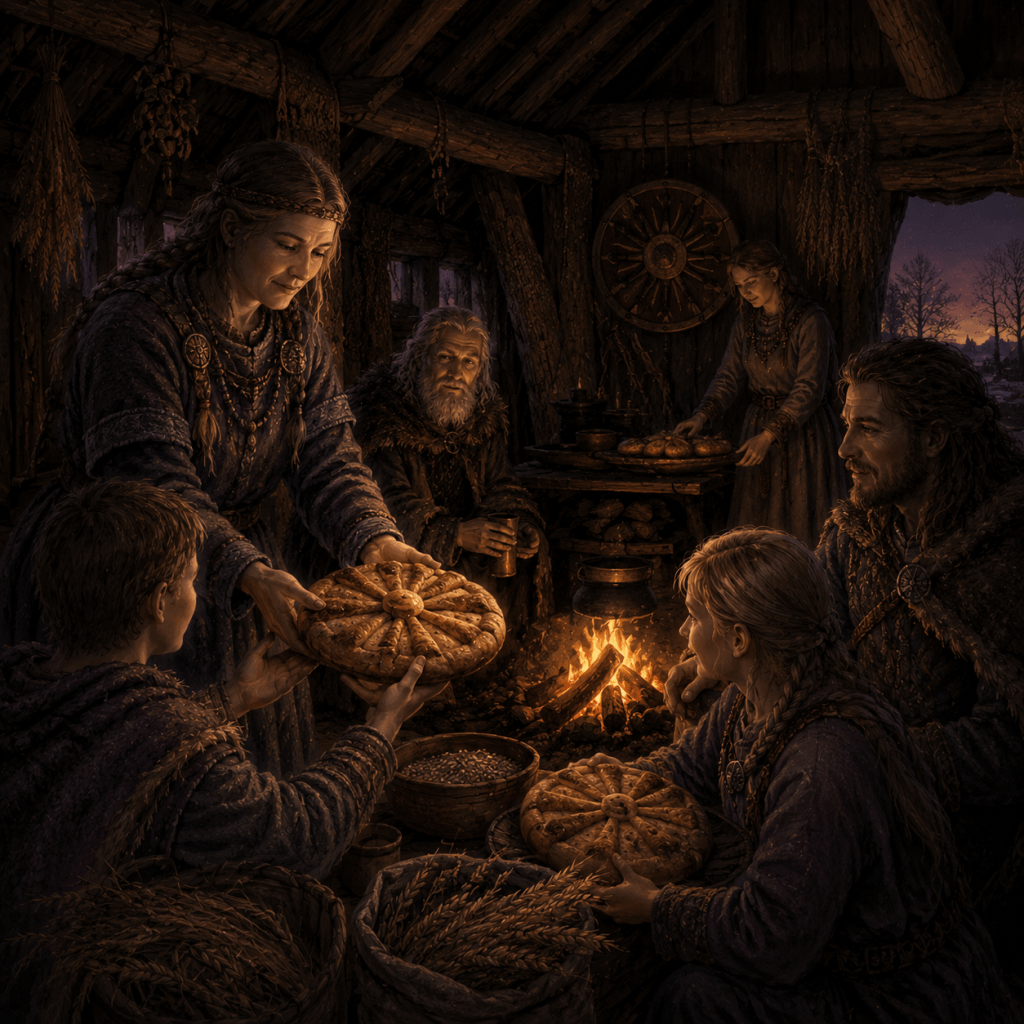
Among the Harthmar, sun-wheel breads are baked from winter grain and marked with crossing lines before they enter the oven. These are shared among the household after the offerings are made. The round shape recalls the returning sun, but also the turning of kinship: no one stands alone, and no year belongs only to itself.
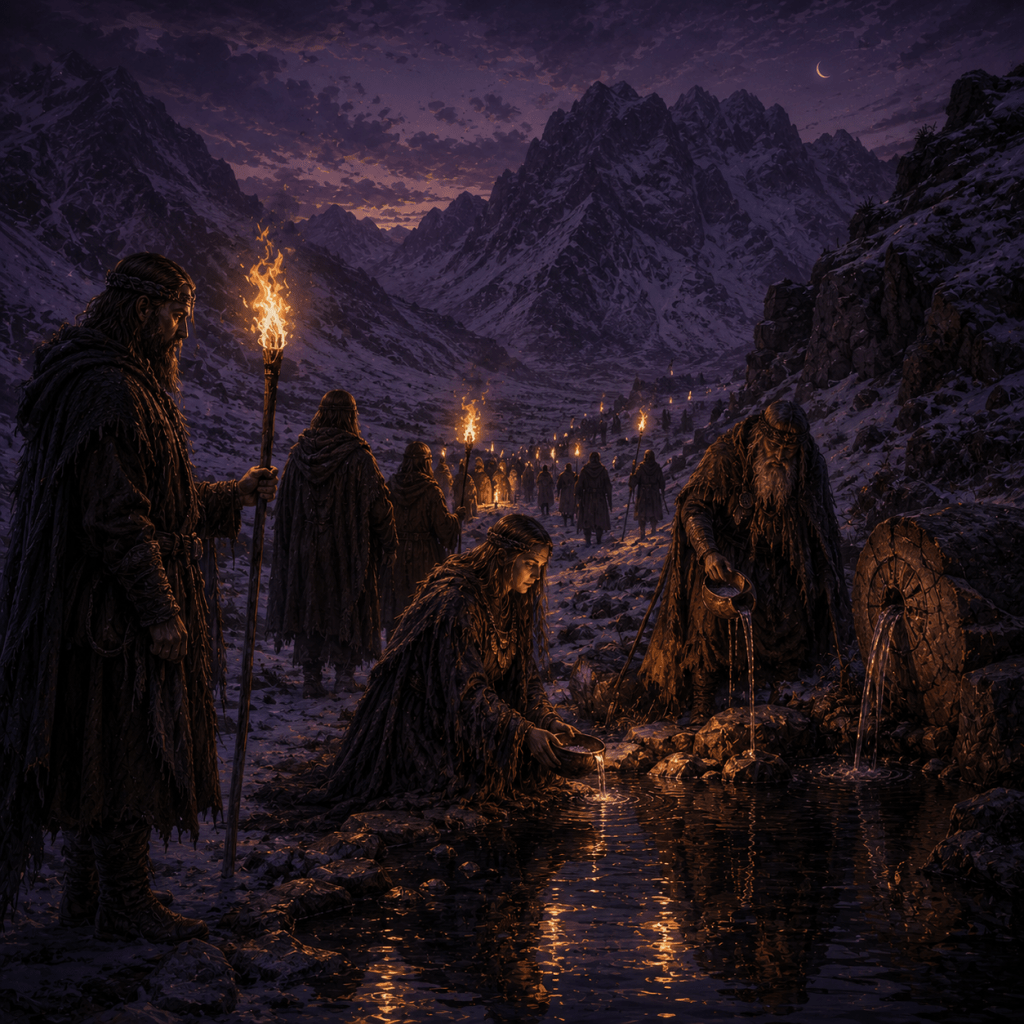
Among the Wulfbrunn, Yule is carried outward into the cold. Torchlight processions climb from valley springs to mountain springs, blessing both low water and high water. The people say that if the springs are remembered in winter, they will remember the people in spring. At the final spring, beer is poured, and the torch flames are reflected in black water beneath the stars.
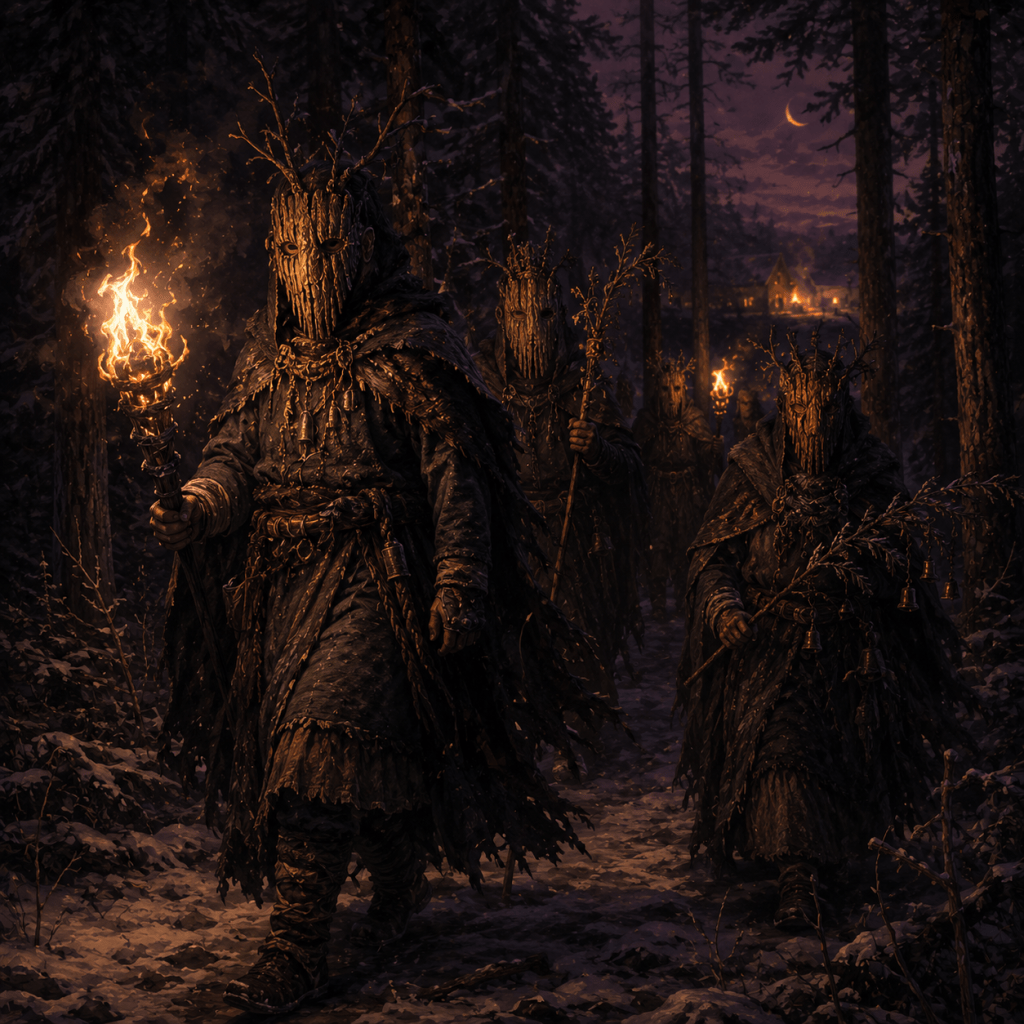
Among the Tharnwalder, the custom is stranger. At midnight, masked walkers enter the forest with bells, brands, and carved faces of bark or hide. They do not go to frighten the living, but to frighten away what would creep toward the hearth: ill-winds, hunger-spirits, fever, spite, and the nameless things that gather where the year is weakest. When the walkers return, they strike the doorposts and speak words of guarding before crossing the threshold.
To outsiders, such customs may seem like superstition.
To the tribes, they are memory given form.
Yule teaches that survival is not passive. The sun must be welcomed. The dead must be honored. Oaths must be renewed. The hearth must be guarded. Winter is endured not by strength alone, but by right relation: with kin, with land, with gods, with ancestors, and with the powers that move unseen around the edge of firelight.
In Irminar, Yule is the long breath before the year begins again.
It is the night in which the people remember why they are a people.
And it is the fire by which they promise to remain one.
 irminar-vihwl